




Welcome
to the
Municipality of Cumberland



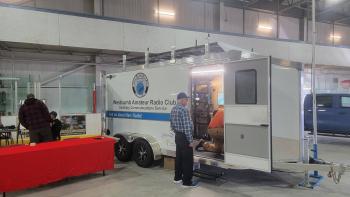






The Municipality of Cumberland seeks volunteers to join the Volunteer Fire Service.
The fourteen volunteer fire departments throughout the County are organizations dedicated to saving lives and protecting property through fire prevention, suppression and public education. We are committed to continuous learning and superior customer service. If you like helping people, and appreciate continuous learning; you may be an ideal candidate for a position as a volunteer firefighter.
Any Questions, please contact Kendell Spence, Manager of Fire Services, at (902) 694-4434 or
Contact the Manager of Fire Services Kendell Spence at (902) 694-4434 or
The Volunteer firefighter performs firefighting duties and other related work as required. This is manual work of a hazardous nature involving the fighting of fires, salvage, rescue work, and first aid. Firefighters may be required to make decisions and work without supervision until an Officer arrives at the scene.
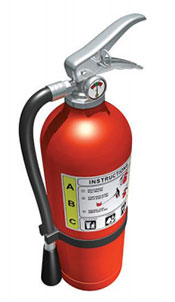 The letters on the label of a fire extinguisher indicate the classes of fire that the extinguisher can put out. This extinguisher, for example, is suitable for ordinary combustibles such as wood, cloth, paper and rubber; flammable or combustible liquids; gases; grease and oil; and any fire that involves live electrical equipment.
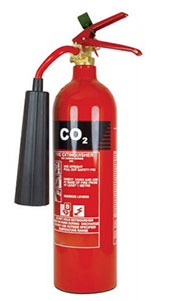 Carbon dioxide fire extinguishers are filled with non-flammable carbon dioxide gas under extreme pressure. They work by taking away the fire’s oxygen supply and are frequently found in laboratories, mechanical rooms, kitchens, and flammable liquid storage areas.
Basically, a fire extinguisher is a portable device, carried or on wheels, and operated by hand, containing an extinguishing agent that can be expelled under pressure for the purpose of suppressing or extinguishing fire. Extinguishers are used to put out small, early-stage fires. Extinguishers are not designed to fight large or spreading fires.
There are various types of fire extinguishers, each rated for different fire hazards. The different types of extinguishers are distinguished by their designated ratings, which indicate the type of fire hazard on which they are designed to be used. Extinguishers contain various extinguishing agents, such as carbon dioxide, water-based agents, dry chemicals, wet chemicals, dry powder and clean agent gas.
Fire extinguisher ratings are provided on the label of the fire extinguisher. The numbers assigned by Underwriters Laboratories indicate the relative effectiveness against each type of fire, regardless of the weight of the extinguisher or the chemical it uses. The higher the number, the greater the effectiveness. The letters indicate the classes of fire that the extinguisher can put out.
The number given on a Class A extinguisher represents the volume, in cubic metres, of combustible materials that an experienced individual may be able to extinguish. This rating ranges from 1A to 40A.
The number of Class B extinguishers represents the area in square metres – with no appreciable depth (appreciable depth is defined as a depth of liquid greater than six millimetres) – that may be extinguished by an experienced individual. This rating ranges between 1B and 320B.
The classification of the hazard (low, medium or high) will determine the numeral rating and the number of extinguishers required per floor area. A 2A:10-B:C fire extinguisher is recommended for a home, garage, car, boat or RV.
Ordinary combustibles such as wood, cloth, paper and rubber. The symbol for this class is a green triangle.
Flammable or combustible liquids, flammable gases, grease, oil and similar material. The Class B symbol is a red square.
A Class C fire is any fire that involves live electrical equipment. Once the electricity has been shut off, the fire becomes the class of whatever material is burning. The symbol for this class is a blue circle.
Certain combustible metals such as sodium, magnesium and potassium. You should not have to worry too much about this type of fire in your home. The symbol for this class is a yellow star.
Used on fires that involve vegetable oils, animal oils, or fats in cooking appliances. These extinguishers are generally found in commercial kitchens.
Here’s an easy way to remember these types of fires
Carbon dioxide extinguishers are filled with non-flammable carbon dioxide gas under extreme pressure. They work by taking away the oxygen element of the fire triangle; this can prove dangerous for the operator. Carbon dioxide extinguishers may be ineffective at extinguishing Class A fires because they may not be able to displace enough oxygen to successfully put the fire out. These types of extinguishers are frequently found in laboratories, mechanical rooms, kitchens, and flammable liquid storage areas. As of 2010, there are no refills for fixed Halon fire-extinguishing systems, except for critical uses. Alternative agents are available on the market and include inert gases, carbon dioxide, water mist systems, and clean agents. These agents are similar to Halon agents in that they are non-conductive
Regular water extinguishers are the oldest type; the advantage of these extinguishers is that they do not leave any residue nor will they deprive the user of oxygen. There is an electrocution hazard if used on or around electrical devices.
This type of fire extinguisher normally contains compounds such as potassium acetate and is intended to form a protective layer over burning liquids, depriving the fire of oxygen while lowering the liquid’s flash point. These are particularly useful on aircraft and in kitchens, where fires should be smothered. Also, wet chemical extinguishers are highly effective for controlling grease fires. As with the water types of fire extinguishers, contact with live electrical devices can cause electrocution and should be avoided.
Foam extinguishers are widely used in industries that deal with combustible and flammable mixtures of fuel. The foam is intended to smother the fire and provide an airtight seal over the burning fuel. Additionally, foam extinguishers generally prevent flashback (the fire starting again) and can be used around electrical equipment. Because there are many chemicals within the foam, these extinguishers are rarely used around areas that store food.
AR-AFFF foam extinguishers contain an alcohol-resistant (AR) type of aqueous film-forming foam (AFFF) that is specifically formulated for optimum use in a hand-portable fire extinguisher.
Dry powder fire extinguishers are excellent at fighting all forms of fire and can be used in almost all environments. However, they do little to cool the heated material and there is a chance that the fire may reignite. Additionally, inhalation of the powder may cause respiratory distress. This extinguisher should be used only in a well-ventilated area.
The aforementioned extinguisher types are the more common types. The following are examples of single-purpose extinguishers:
For use in and around MRI rooms and suitable for use on energized electrical equipment.
For use outside and around MRI rooms and suitable for use on most common fires.
This is part of an article that was published in Fire Fighting in Canada and written by Ed Brouwer
Ed Brouwer is the chief instructor for Canwest Fire in Osoyoos, B.C., and Greenwood Fire and Rescue. The 21-year veteran of the fire service is also a fire warden with the B.C. Ministry of Forests, a Wildland Urban Interface fire suppression instructor/evaluator and a fire-service chaplain. Contact Ed at
Contact: Local Fire Chief for information
Contact: Nova Scotia Office of the Fire Marshal – 800 559 3473 -
Contact: Municipality of Cumberland County – 902 667 2313 –
Contact: Local Fire Chief
We are not too far from the days when the leaves turn, hot chocolate is warming on the range and we are going to need to heat our homes. Statistics show that fires increase in the winter months. During winter months, heating equipment is the leading cause of home fires.” First, have your heating system serviced by a qualified technician. If you don’t have an evacuation plan, think about creating one.
We’ve all heard it the recommendations, but most of us never follow the advice of those who are best positioned to help us. Every home, particularly those with young children, elderly adults, handicapped or the infirm, should have an evacuation plan. Having a plan is only part of what should be completed. Experts recommend that every plan be practiced at least twice per year. You can help children understand the importance of having an escape plan by using Sparky’s help.
In the event of a fire, time is the biggest enemy and every second counts. In less than 30 seconds a small flame can get completely out of control and turn into a major fire. Escape plans can help you get out of your home quickly.
Create and practice your escape plan
If your home catches on fire: STAY LOW, GET OUT and STAY OUT!
If your clothes catch fire: STOP, DROP, and ROLL until the flames are put out
Never open doors that are hot to the touch, use another way to escape including a window.
Replace smoke alarms that are older than 10 years
Test alarms monthly by pushing the “test” button for 3-5 seconds