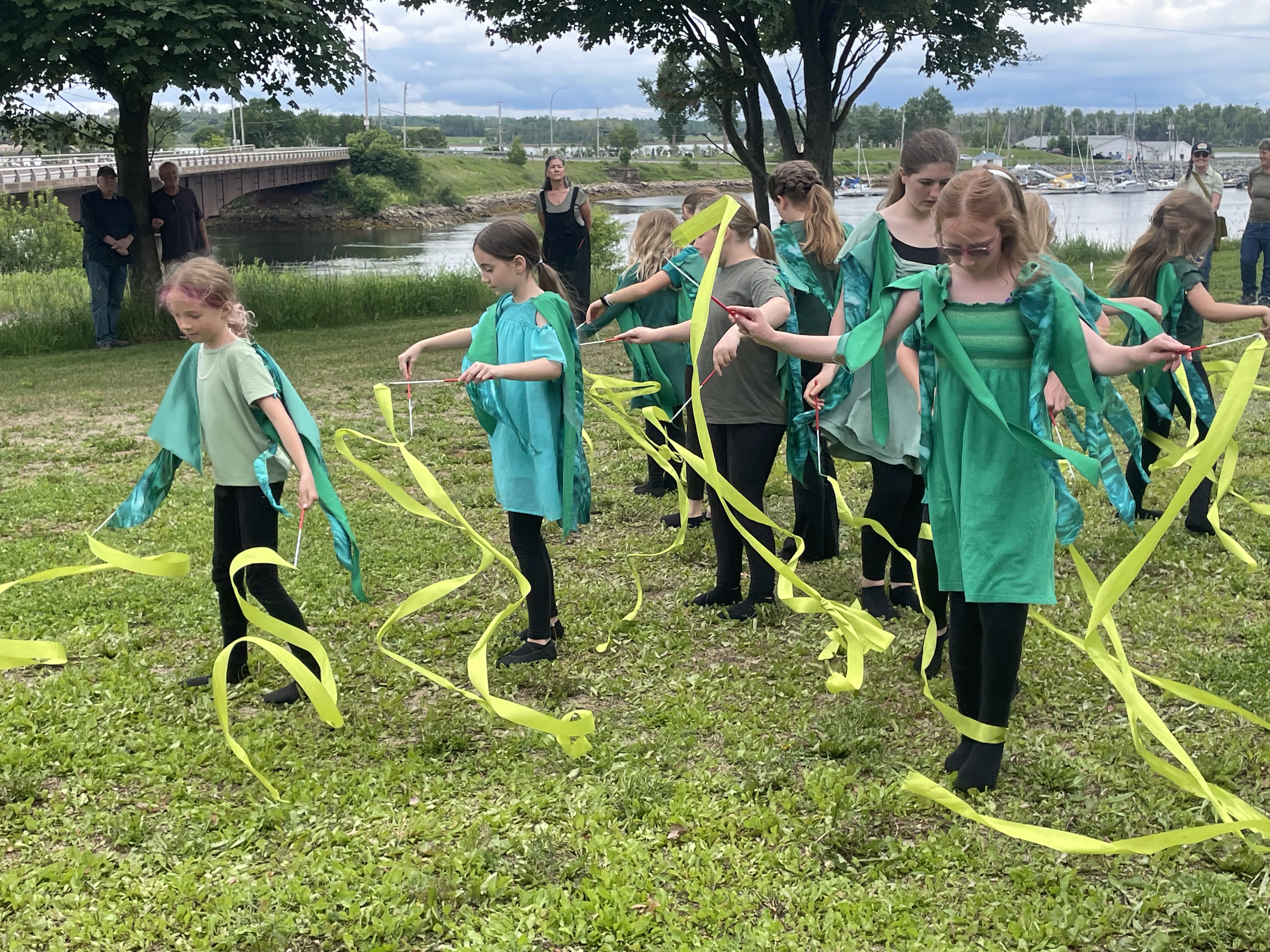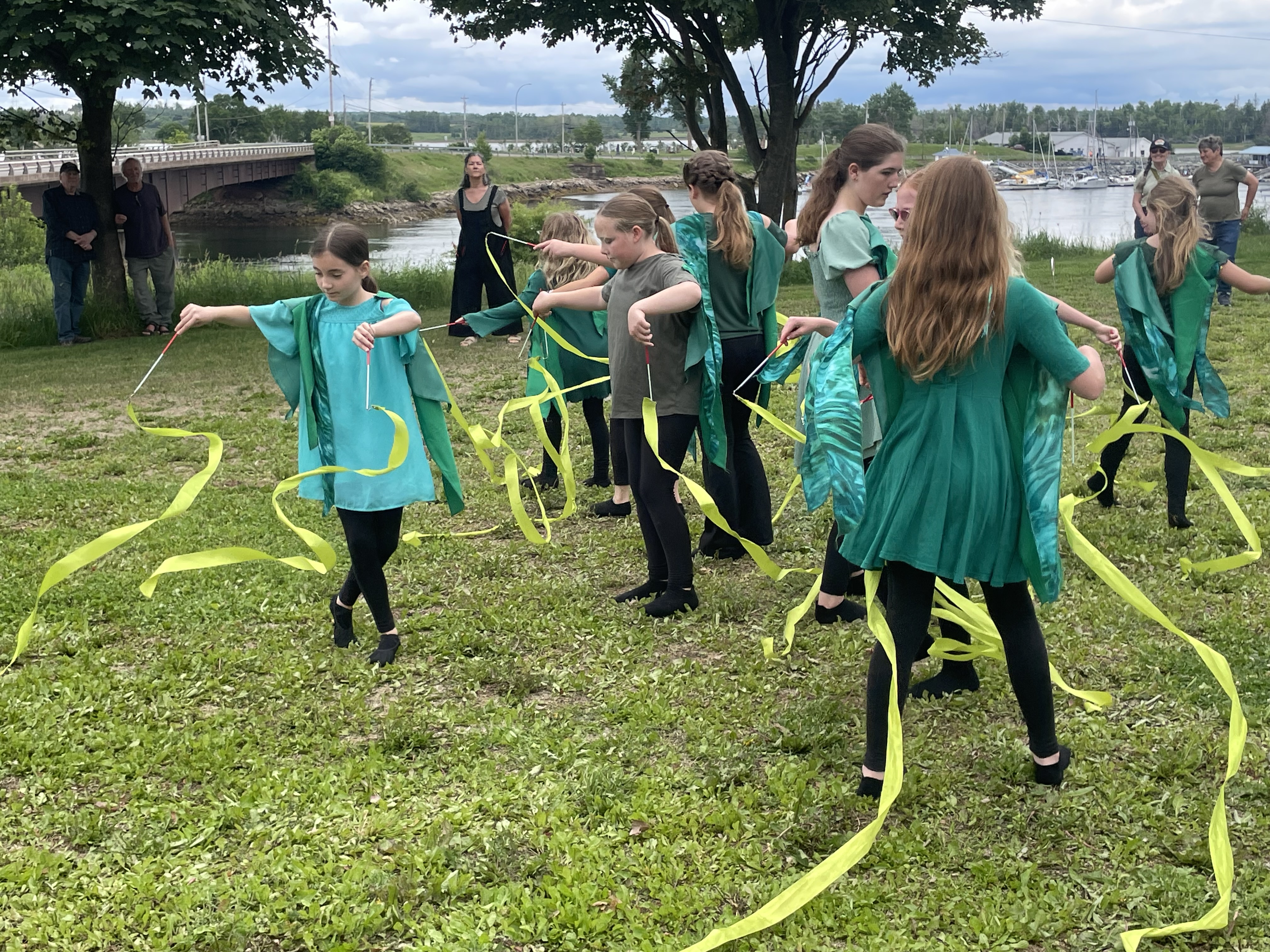

Pugwash has long been known as a community that embraces art.
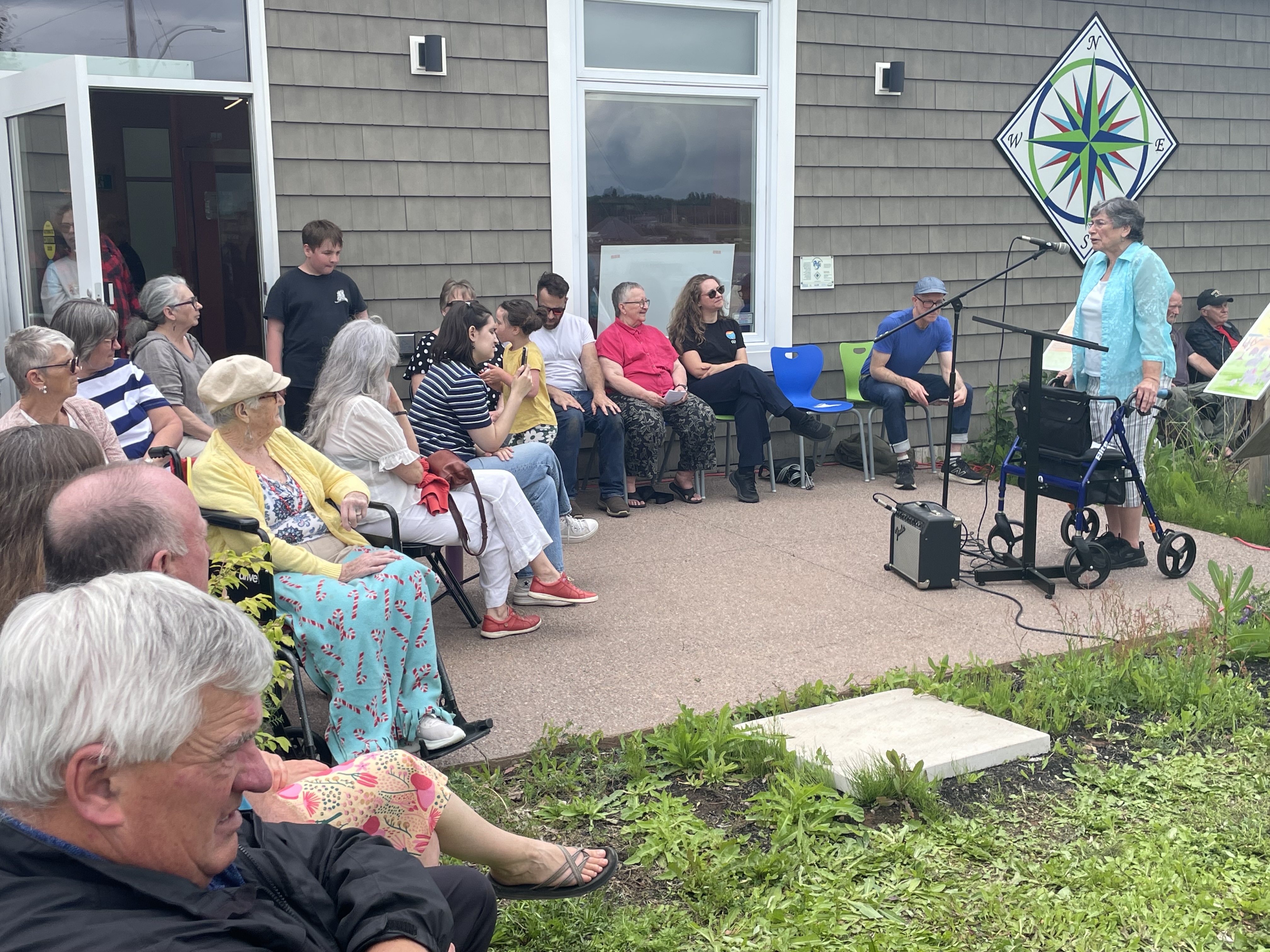
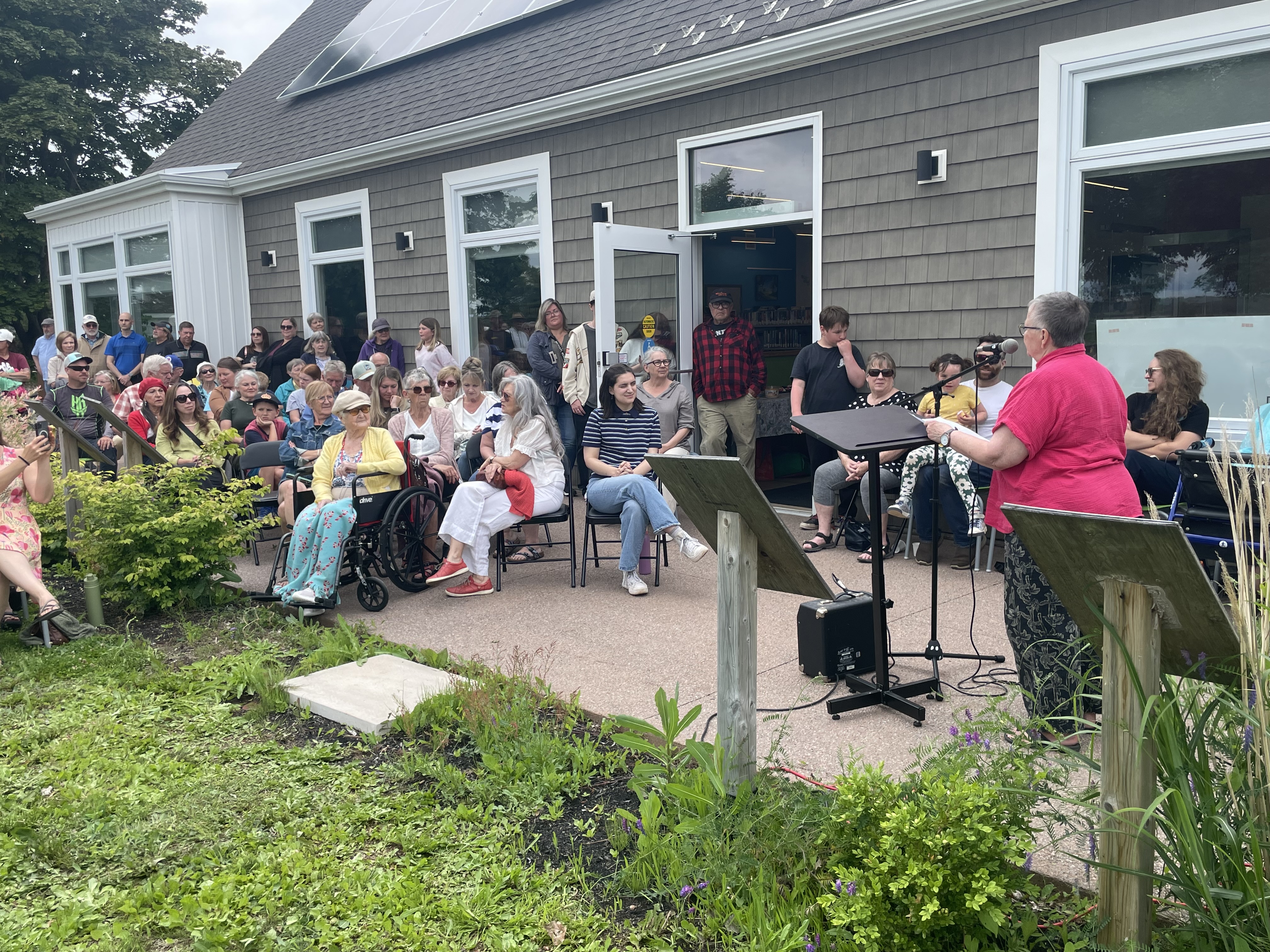
Over the years, nearly 20 art pieces have been affixed to the walls of the village core as part of the Pugwash Open Air Gallery. On Saturday, June 27, 2026, the latest addition to the gallery was unveiled at the Pugwash Library.
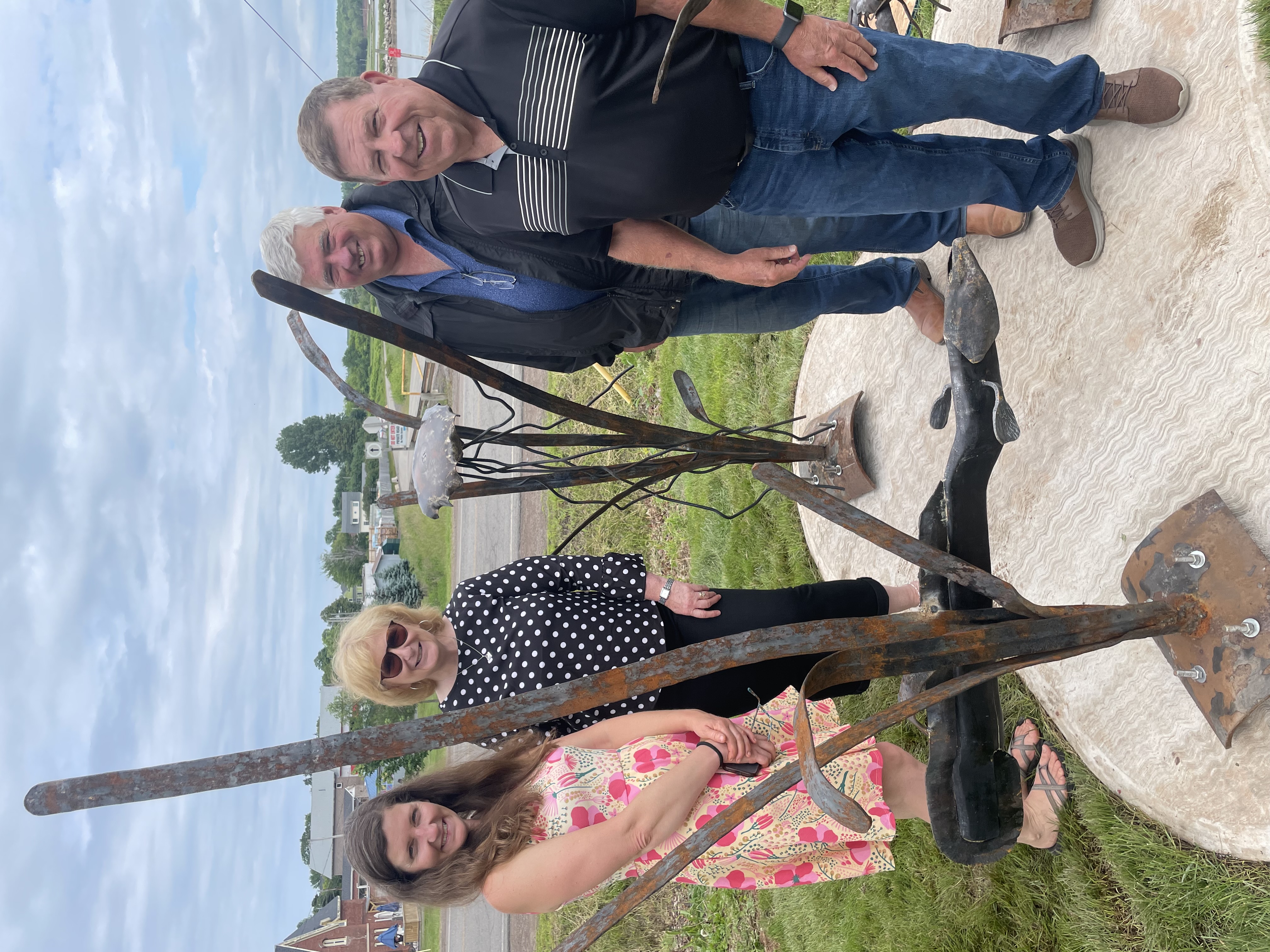
The Community Eelgrass Restoration Initiative, part of the Future of Marine Ecosystems Lab at Dalhousie University, has been working with Halifax’s Zuppa Theatre and the open air gallery to create sculptures that celebrates the eelgrass replanting that occurred in 2024 with the Friends of the Pugwash Estuary.
The sculptures are meant to serve as a reminder to never forget unseen ecosystems and to always remember the power of a rallied and committed community.
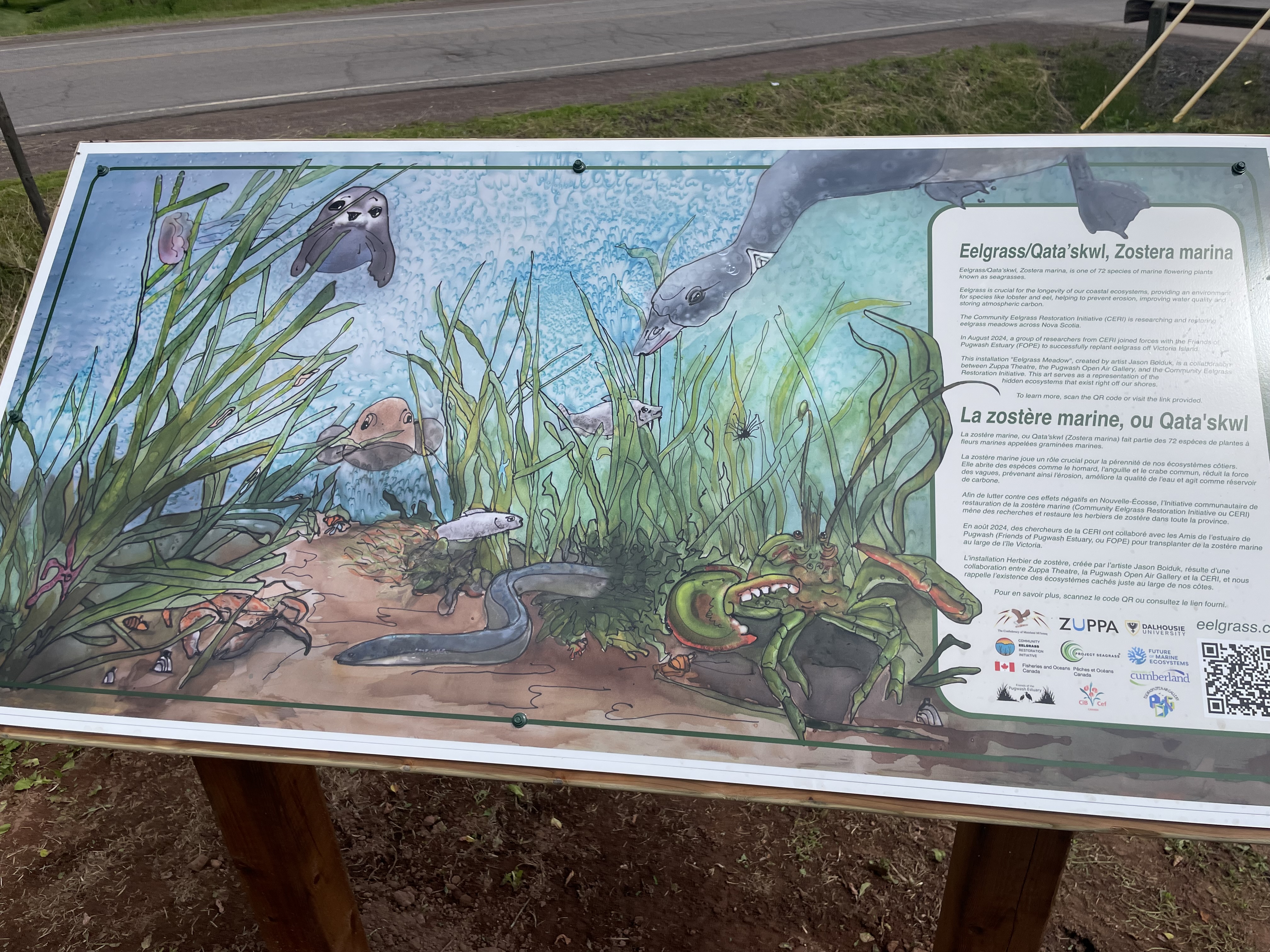
Artist Jason Boiduk developed and manufactured the sculptures that depict the jellyfish, lobster and fish (in this case an eel) that utilize the eelgrass. Janice Boiduk created the interpretive panel that sits beside the sculptures on library property, while the project had huge collaborative support from Norene Smiley, Louise Cloutier, Jennifer Houghtaling and Sarah Witney.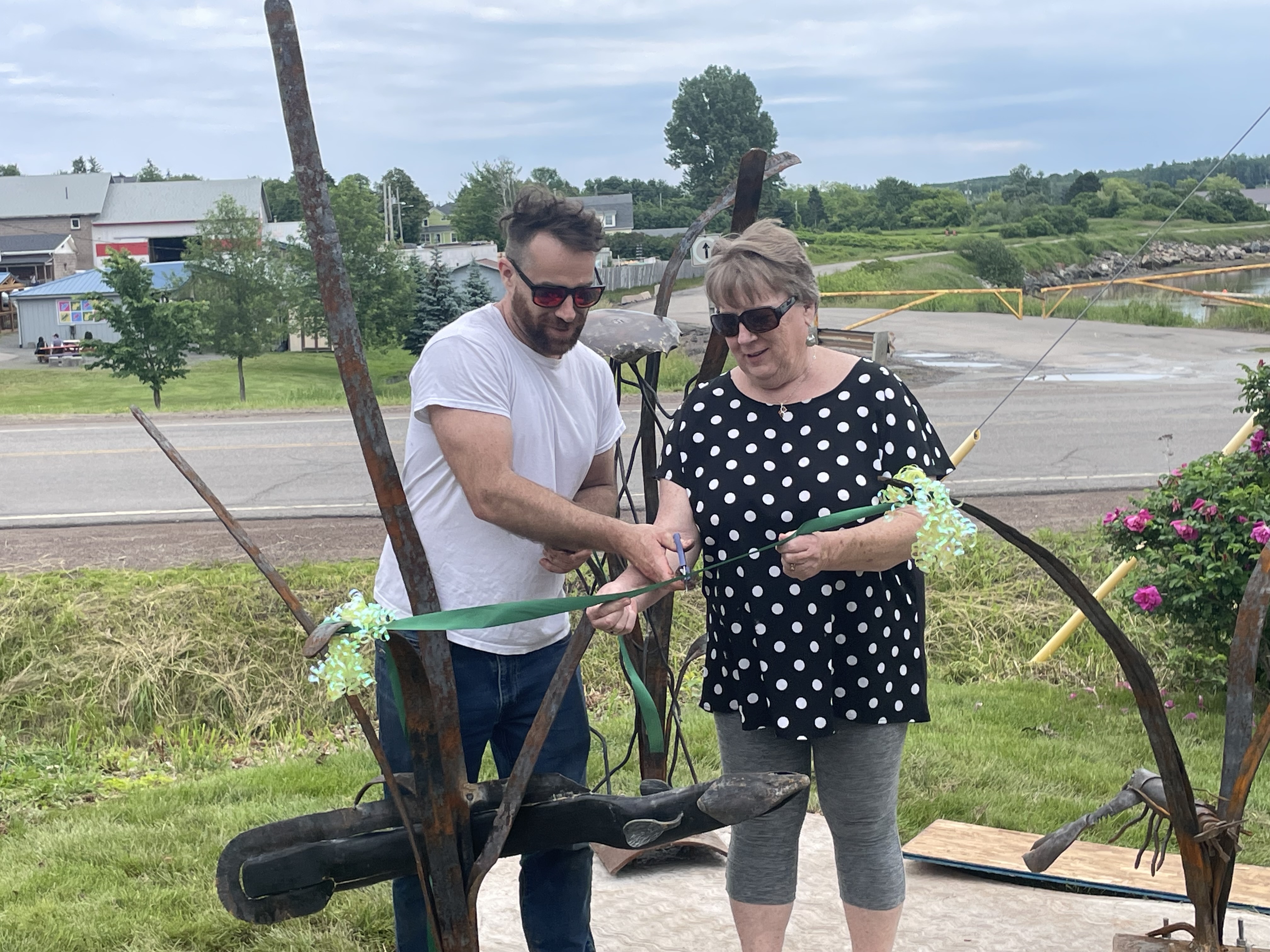
Jason and Janice Boiduk cut the ribbon to officially unveil the new eelgrass sculptures at the Pugwash Library. They are a joint project of the Pugwash Open Air Gallery, Communities in Bloom, the Friends of the Pugwash Estuary, Dalhousie University’s Community Eelgrass Restoration Initiative and Zuppa theatre of Halifax. Darrell Cole – Municipality of Cumberland photo
“Our entire committee put our heads together to come up with an art project that would be lasting in the community,” Smiley said. “We’ve spent a lot of time working with a number of outdoor installations in the village and just thought this one fit perfectly into what we’ve been doing.
“It’s a great addition to the Pugwash Open Air Gallery.”
She thanked Mike Cunningham and the Municipality of Cumberland for their support.
“We learned more about eelgrass than we ever thought we would,” she said, adding Pugwash Communities in Bloom was very supportive of the legacy project.
Eelgrass is one of 72 species of marine flowering plant known as seagrasses. Eelgrass produces pollen, has a flowering body and requires sun to photosynthesize. It is crucial for the longevity of coastal ecosystems.
Pugwash is surrounded by coastal ecosystems, many of which include lush eelgrass meadows. These meadows provide a variety of ecosystem and climate benefits. Eelgrass is home to culturally and economically significant species, slows wave action which prevents erosion, improves water quality and stores atmospheric carbon.
Eelgrass has been experiencing decline around the globe, losing approximately 110 square kilometres per year. In Nova Scotia, this decline is due to nutrient pollution and coastal development along its coasts, invasive species, destructive fishing and aquaculture development, warming waters and the spread of diseases.
The Community Eelgrass Restoration Initiative (CERI) is researching and restoring eelgrass meadows across Nova Scotia. They do so by working with local communities to source out where eelgrass has disappeared and to find suitable replanting sites.
“Not only are we restoring eelgrass meadows, but we’re also trying to research and understand them,” Taylor Seed of CERI said. “There’s not a lot of baseline data in Nova Scotia.”
Seed said the project is a way to thank the community for its support.
“Conservation doesn’t exist in its truest form without the arts,” she said. “This is a really great way to educate people on the hidden ecosystems off their shores and how important it is to their livelihood here in Pugwash. You can’t see it and when it washes up they call it the ‘yucky, green stuff.’ We’re trying to rebrand it into the superpower plant that it is.”
Seagrasses, like eelgrass, only cover 0.2 per cent of the ocean floor, but Seed said they are huge carbon sinks helping reduce greenhouse gas levels and mitigate climate change.
In August 2024, a group of researchers from the CERI joined forces with the Friends of Pugwash Estuary to replant eelgrass off Victoria Island. With the help of volunteers, 1,750 eelgrass shoots were replanted. Their long-term goal is for this replanting site to fully establish and create a new and vibrant ecosystem.
Ben Stone is the co-founder and co-artistic director of Zuppa, based in Halifax. He said he was “blown away” to see the finished product. He calls it an incredible piece of art and said it was a pleasure working with the artist.
“I was approached three years ago by a professor from Dalhousie University who was aware of a public art project I’d done with the Ecology Action Centre. Their idea was to create legacy pieces of public art that could stay in the community where the eelgrass restoration was happening as a reminder and thank you to community for the effort they put into the replacement and remind everyone that eelgrass is just off the shore and is threatened,” Stone said.