

Springhill’s expansive geothermal resource continues to gather attention.
Geo-science students from Dalhousie University’s Earth and Environmental Sciences program, including students from Texas, China and Nigeria, visited the community on Friday, Sept. 19, 2025, visited the Dr. Carson & Marion Murray Community Centre and the miners’ museum to learn more about the area’s mining heritage and how Springhill has taken advantage of geothermal energy from the mines.
“This gives the students an opportunity to learn more about the natural resource and the wealth of energy systems we have in the province, including geothermal,” professor Grant Wach said. “This is a wonderful example of geothermal in Nova Scotia.
“In my mind geothermal is the greenest of renewable energy in that you’re not damming up rivers or using fossil fuels, you’re just using the natural heat in the Earth through the water.”
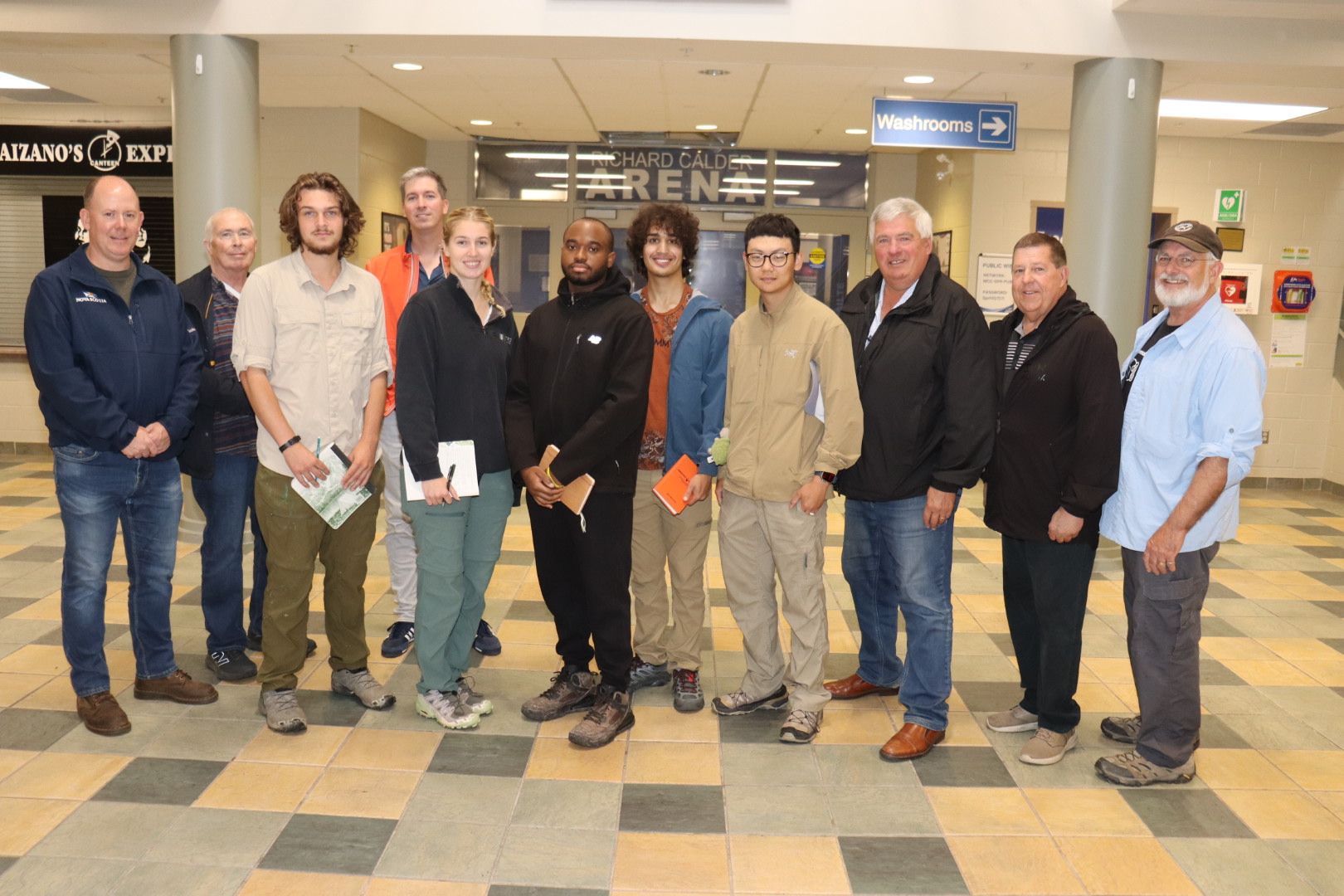
The Dr. Carson & Marion Murray Community Centre in Springhill was visited by a group of geo-science students from Dalhousie University’s Earth and Environmental Sciences program. Darrell Cole – Municipality of Cumberland photo
Geothermal energy is generated by extracting heat from underground sources. In Nova Scotia, abandoned mines that are at least 1,000 metres deep have warm water that can be used to heat homes and other buildings. Cumberland County is already successfully using geothermal technology in shallow depths at sites that have potential at deeper levels.
The community centre, the NSCC Cumberland campus, Mauser Packaging and Surrette Battery are just some examples of how Springhill has taken advantage of geothermal energy.
Geothermal energy from the mine workings helps chill the ice at the Richard Calder Arena inside the community centre while waste heat from this process is used to provide radiant heat to the building.
Wach maintains the community is perfectly positioned to provide a green energy source in the energy corridor that runs through the area and includes wind and solar energy and the continued study of tidal energy in the Minas Passage near Parrsboro.
The presence of coal in Springhill was first recorded by Abraham Gesner in the 1830s. Of 60 coal seams five were mined extensively before large scale coal mining ended in the 1950s with the explosion of 1956 and the 1958 Bump. Many of the remaining mines were abandoned in the 1970s and many mine workings began to fill with water.
Geothermal wells have been drilled in Springhill since the 1990s and 17 are currently being utilized.
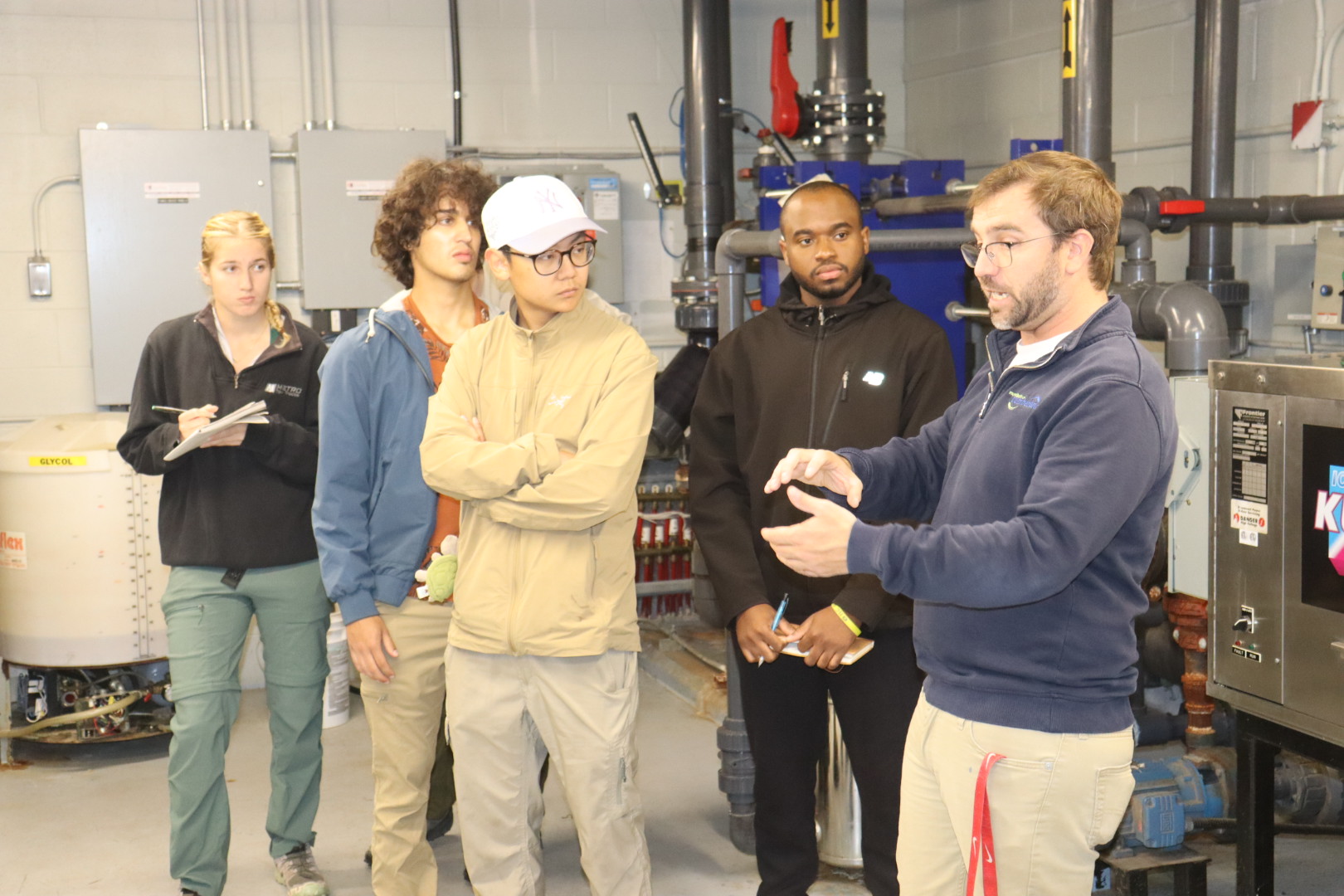
Corey Skinner, manager of recreation programs and services at the Dr. Carson & Marion Murray Community Centre in Springhill, explains to students from Dalhousie University’s Earth and Environmental Sciences program how geothermal energy is used within the facility. Darrell Cole – Municipality of Cumberland photo
Municipality of Cumberland Mayor Rod Gilroy was joined by director of Development and Planning Glen Boone and Climate Change and Special Projects special advisor Steve Ferguson in welcoming the students to the community.
The municipality is partnering with the Nova Scotia Community College in a study by the provincial Natural Resources and Renewables Department to determine how to take advantage of the geothermal resource.
“It’s great for us as a municipality to be able to share how effective geothermal energy can be and what the possibilities are for us,” the mayor said. “There’s a huge untapped resource here and hopefully they will go back and brainstorm some ideas that will help us out.”
The mayor said a geothermal committee has done a lot of work the past two years on collecting the data.
“A lot of great things have happened in the last six to eight months. We have a great committee and we’re at the point now that we need to find a partner and some programs to apply the geothermal resource to,” Gilroy said. ‘There are all kinds of applications to consider using geothermal. We’re open to everything and we’re actively trying to get a project going.”
Cumberland South MLA and Natural Resources and Renewables Minister Tory Rushton said he has been working on the geothermal file almost from the time he was first elected eight years ago.
“We’ve done a lot of studies on this and now we’re looking to move forward. We have some actual action items as a committee and with these students coming here today, what we’re doing is being seen all over the world,” Rushton said.